Cabinet Refinishing Buffalo Grove: No Chips or Brush Marks
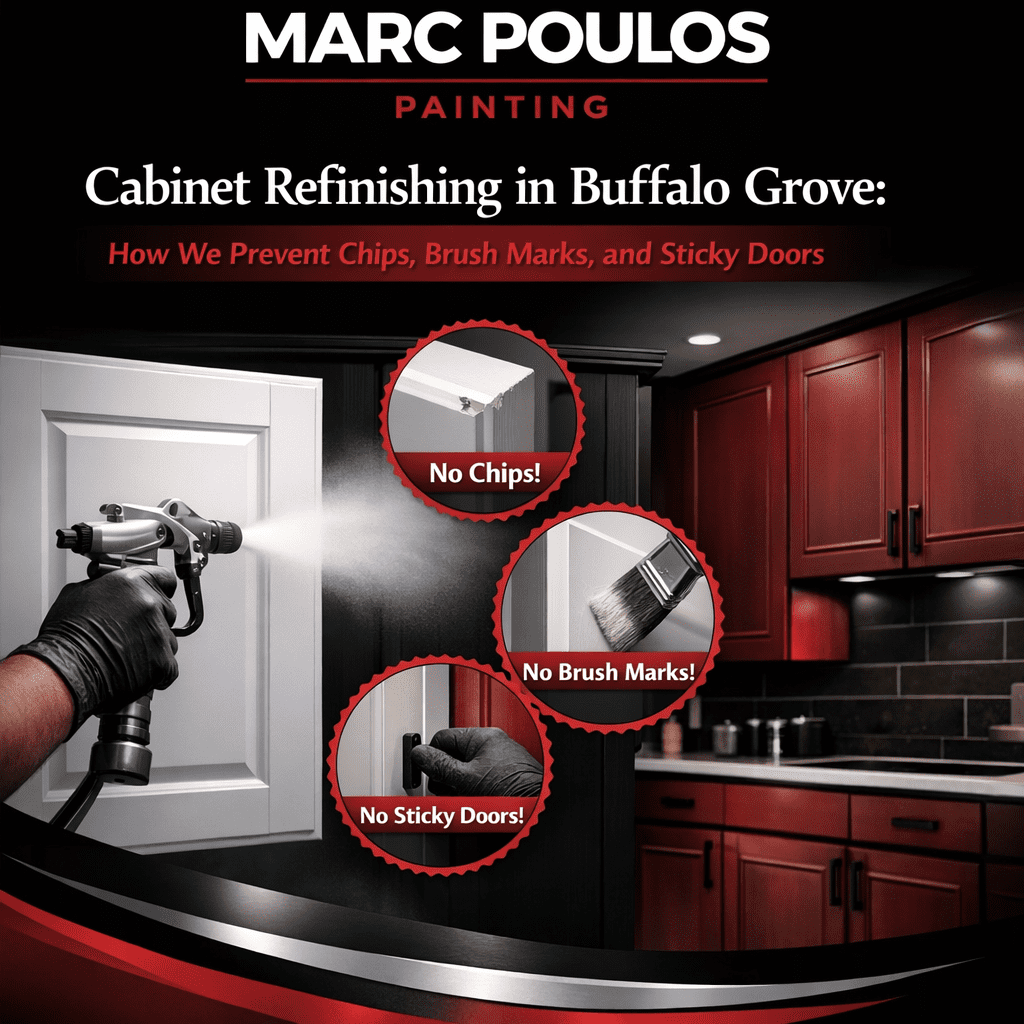
- Professional cabinet refinishing requires High-Durability Two-Component (2K) commercial grade coatings, not standard latex, to ensure chemical resistance and prevent common failure symptoms like chipping.
- A texture-free, factory-smooth finish is achieved exclusively through specialized spray application equipment and rigorous Surface Preparation (including meticulous fine grit sanding between coats) to eliminate visible brush marks.
- To prevent doors from sticking, the process relies on applying multiple thin, even coats (avoiding excessive buildup) and utilizing Controlled Environmental Ventilation to ensure the coating cures fully to maximum hardness.
Refinishing your kitchen cabinets or bathroom vanities is the most impactful and cost-effective way to transform your Buffalo Grove home without a full remodel.
However, homeowners often fear the common failure symptoms of cabinet coatings, such as chipping, sticky doors, and visible brush marks. We know that do-it-yourself cabinetry projects frequently suffer from these adhesion issues of painted components.
At Marc Poulos Painting, we specialize in professional quality fine finishing. We understand that painting cabinet doors demands a far higher standard than standard wall painting.
We deliver a durable look that rivals factory finishes, utilizing professional spray systems and commercial grade coatings.
This detailed guide explains how our cabinet painting process ensures absolute smoothness and absence of texture in coatings. We guarantee a texture free finish, eliminating common application flaws like visible brush marks and roller texture, ensuring longevity and helping prevent doors from sticking.
Why Standard Painting Fails on Cabinetry
When you approach cabinet painting like a typical interior wall job, the results often fail within a year. Cabinets are high-touch furniture, not drywall, and they require specialized functional craftsmanship, not just cosmetic work.
This premature wear, often resulting in chipping, peeling, or sticky doors, happens because standard interior paints and inadequate surface preparation are not designed for the daily abuse kitchen cabinets endure.
We frequently observe that many do-it-yourself cabinetry projects suffer from adhesion issues of painted components, leading to visible brush marks and early failure symptoms of cabinet coatings.
Cabinetry demands meticulous detail. We adhere to the rigorous standards upheld by fine finishing experts, including Murray’s Modernized Furnishings and Prescott Cabinet Painting & Fine Finishes in Prescott, Arizona.
The Critical Role of Surface Preparation and Priming
The core failure point for most DIY cabinets and low-quality refinishing is inadequate Surface Preparation and Isolation Procedures. Skipping crucial degreasing, sanding, and proper priming ensures the paint will chip or peel.
This lack of prep prevents a durable look and leads directly to sticky doors and chipping, especially on high-use areas like bathroom vanities and cupboard doors.
The Necessity of Commercial Grade Coatings
Cabinetry demands more than standard consumer latex. We use commercial grade coatings, specifically High-Durability Two-Component Paint Systems (2K coatings).
These specialized paints provide the chemical resistance necessary to prevent the finish from remaining tacky, which is the primary cause of sticky doors and premature wear. Inferior paint choice guarantees finish failure within a year.
Achieving a Smooth Finish: Spraying vs. Brushing
Achieving a truly smooth finish and texture free finish means eliminating application flaws like visible brush marks and roller texture. While some DIY tips suggest specific brushing techniques, professional refinishing kitchen cabinets requires specialized spray application equipment.
Our professional spray systems ensure a consistent, factory-like finish, essential for maximizing cabinet durability and providing a completely smooth finish.
Controlling Environmental Factors and Curing
Environmental control is critical. High humidity levels during application can cause paint to remain tacky long after it seems dry. This tackiness prevents the finish from fully hardening, directly causing the door sticking issue.
We utilize controlled environmental ventilation and ensure proper drying and curing time. Rushing the curing stage, especially common in the restoration of wood furniture or DIY tips, guarantees premature wear in high-use areas.
The Importance of Thin, Even Coats
Our painting technique relies on applying thin, even coats of paint. This prevents excessive material buildup that can make cabinet doors stick when closed and layers peel or chip prematurely.
A professional step by step guide emphasizes multiple thin layers rather than one thick coat. This method is crucial for ensuring cabinet durability and longevity.
Sanding for Smoothness and Adhesion
Proper sanding is fundamental to achieving a professional quality fine finishing result. We sand with fine grit between coats to eliminate application flaws and ensure maximum adhesion.
This meticulous sanding process contributes significantly to the final smoothness and absence of texture in coatings, eliminating brush marks and preparing the surface for the next layer of 2K coatings.
Avoiding Excessive Layers and Build-Up
To maintain critical tolerances and prevent sticky doors, we strictly avoid overpainting and applying excessive layers. Thick layers cause doors to stick and ultimately peel.
Our process focuses on minimum material build-up for maximum durability, ensuring that when we paint cabinet doors, they function perfectly upon reinstallation.
At Marc Poulos Painting, we adhere to these functional craftsmanship standards, ensuring your refinishing kitchen cabinets project results in a durable look that lasts for years, free from chipping or sticky doors.
The Essential Foundation: Surface Preparation and Priming
Achieving a durable, professional finish starts long before the first coat of color is applied. Proper priming and surface preparation are the single most critical steps we take to prevent issues like chipping, sticky doors, and visible brush marks.
When refinishing kitchen cabinets or bathroom vanities, we treat preparation as the most crucial phase of cabinet painting. We begin every project with extensive Surface Preparation and Isolation Procedures.
Unlike standard interior painting, any residual grease, cooking oil, or dirt left on the surface will inevitably lead to adhesion issues of painted components down the line. We utilize specialized cleaning agents followed by commercial grade coatings designed specifically for cabinet materials, ensuring maximum bonding strength.
Skipping this crucial cleaning and bonding primer stage often results in finishes that display the common failure symptoms of cabinet coatings, such as premature peeling and sticking, especially around door edges.
Meticulous Sanding for a Texture Free Finish
Proper sanding is vital for achieving the desired smoothness and absence of texture in coatings. If you desire a truly smooth finish that rivals a factory application, meticulous sanding is non-negotiable.
We sand all cupboard doors and cabinet boxes meticulously using fine grit sandpaper, often 220 or higher, between every coat of primer and paint. This process removes any minor imperfections or raised wood grain.
This attention to detail ensures the final finish is truly texture free and significantly reduces the risk of application flaws like visible brush marks or roller texture, even before we introduce professional spray systems.
Applying Thin, Even Coats
A key difference between professional fine finishing and do-it-yourself cabinetry projects is the application of thin, even coats. By sanding between coats, we avoid the excessive layers that are hallmarks of inferior application.
Avoiding overpainting is essential to prevent doors from sticking and peeling later on. We apply multiple thin coats rather than one thick layer, which builds depth and cabinet durability without compromising the fit of the doors.
Selecting High-Durability Coatings (The 2K Difference)
A professional, durable look requires more than just careful preparation; it demands superior materials. Standard interior paints simply cannot provide the cabinet durability required in a high-traffic kitchen.
That is why Marc Poulos Painting utilizes High-Durability Two-Component Paint Systems. These 2K coatings, often sourced from specialists like ICRO Coatings USA, are commercial grade coatings designed for extreme wear, mirroring the quality standards of companies like Prescott Cabinet Painting & Fine Finishes.
These specialized products cure chemically hard, offering far greater resistance to moisture, grease, and impact than typical consumer-grade latex paint. This chemical hardening is crucial to preventing sticky doors and premature chipping.
Achieving Perfection: Professional Spray Application
To eliminate brush marks and achieve the fine finishing our Buffalo Grove clients expect, we rely exclusively on Specialized Spray Application Equipment.
While DIY tips sometimes suggest that careful brushing and rolling can produce a near-factory result, the only reliable way to guarantee a truly texture free finish is through professional spray systems. This painting technique ensures uniform application and superior adhesion across all surfaces of the cabinet doors.
Climate Control and Curing Time to Prevent Doors from Sticking
Even the best 2K coatings can fail if the environment is not controlled. One of the primary reasons homeowners encounter sticky doors and finish failure is improper drying conditions.
We utilize Controlled Environmental Ventilation during and immediately following application. This is essential because high humidity levels can cause the paint to remain tacky, leading to adhesion issues of painted components and premature chipping.
We ensure sufficient proper drying and curing time between coats and before reassembly. Insufficient drying time is a major cause of the common failure symptoms of cabinet coatings. Our detailed process guarantees the coating reaches maximum hardness, delivering lasting cabinet durability and ensuring a durable look for years to come.
Choosing Commercial Grade Coatings for Cabinet Durability
The type of paint you choose directly impacts cabinet durability and the longevity of your refinishing kitchen cabinets project.
We find that many homeowners attempting do-it-yourself cabinetry projects use standard household enamels or wall paint. This is the primary reason why many finishes fail prematurely.
Inferior paints remain tacky long after drying, leading to sticky cabinet doors, and often demonstrate the failure symptoms of cabinet coatings, such as chipping, within a year.
Why High-Durability Two-Component (2K) Paint Systems Are Essential
To deliver a truly durable look and professional quality fine finishing, we exclusively use commercial grade coatings, specifically High-Durability Two-Component (2K) Paint Systems.
These specialized 2K coatings are engineered for intense usage and superior moisture resistance, far surpassing the capabilities of standard household products often used for furniture painting or DIY tips.
The use of these High-Durability Two-Component Paint Systems ensures the smoothness and absence of texture in coatings, preventing the appearance of visible brush marks or roller texture.
We utilize systems employed by industry leaders, including those utilized by Prescott Cabinet Painting & Fine Finishes and specialized suppliers like ICRO Coatings USA, to guarantee the highest cabinet finishes standards.
These advanced 2K coatings cure into an extremely hard, non-tacky finish. This crucial feature completely eliminates the risk of cupboard doors or bathroom vanities sticking to the cabinet frame, ensuring long-term cabinet durability.
Application Technique: Achieving a Texture-Free Finish
The difference between a do-it-yourself cabinetry project and professional cabinet painting is primarily defined by the application method and surface preparation.
While commercial grade coatings provide the durability, the application technique ensures the aesthetic quality, preventing application flaws like visible brush marks, roller texture, and premature failure.
At Marc Poulos Painting, we guarantee a texture free finish on every set of cupboard doors and bathroom vanities we refinish.
Professional Spray Systems for Factory Smoothness
To achieve the ultimate smoothness and absence of texture in coatings, we rely exclusively on Specialized Spray Application Equipment.
Unlike brushing or rolling, professional spray systems atomize the paint into a fine mist. This mist settles smoothly and evenly across the surface, eliminating visible brush marks or roller texture.
This technique is essential for achieving the factory-level smoothness expected in high-end cabinet painting and fine finishing.
While resources like Woodworking For Beginners and Recreated Designs offer excellent DIY tips for furniture painting, using high-quality brushes and foam rollers can only get you close to a durable look.
For guaranteed, texture-free results on refinishing kitchen cabinets, spraying is required.
The Critical Role of Surface Preparation and Sanding
No painting technique, regardless of the quality of the commercial grade coatings used, can compensate for poor preparation.
Proper Surface Preparation and Isolation Procedures are the foundational steps that prevent chipping and adhesion issues of painted components later on.
One of the most common reasons DIY cabinets fail or retain brush marks is skipping sanding between coats.
We perform rigorous sanding with fine grit abrasives to ensure a perfectly smooth substrate before priming and between every thin coat of paint. This removes any minor imperfections or grain raise, guaranteeing a truly durable look.
Thin, Even Coats: Preventing Sticking and Peeling
One of the most common mistakes in cabinet refinishing is applying overly thick coats of paint.
Excessive paint buildup, especially along edges and corners, is a key factor in doors sticking when closed and causes layers to peel or chip prematurely.
We always apply thin, even coats of paint, allowing ample time for “flash-off” and drying between layers. This step-by-step guide to application prevents the excessive buildup that leads to failure symptoms of cabinet coatings.
Applying multiple thin coats rather than one thick coat ensures maximum cabinet durability and a flawless finish that will prevent doors from sticking.
Ensuring Proper Drying and Curing Time
Even when using High-Durability Two-Component Paint Systems (2K coatings), insufficient drying time leads to sticky cabinet doors.
If the surface remains tacky, the cabinet doors will stick when closed, causing damage to the cabinet finishes upon opening.
We utilize Controlled Environmental Ventilation during application and curing. Controlling humidity and temperature is vital to ensure every coat is fully cured before assembly and installation, guaranteeing a professional quality fine finishing result.
This attention to climate control ensures that the finish is hard and completely set, eliminating the risk of sticky doors and maximizing the longevity of your refinishing kitchen cabinets project.
Preventing Sticky Doors: Climate Control and Curing
Sticky cabinet doors and drawers are a common side effect of rushed or improperly managed refinishing projects. This tackiness is one of the most frustrating failure symptoms of cabinet coatings that homeowners face, often leading them to believe do-it-yourself cabinetry projects are not worth the effort.
At Marc Poulos Painting, our professional quality fine finishing process ensures we prevent doors from sticking completely by strictly controlling the environment and adhering to rigorous curing schedules for all our commercial grade coatings.
Controlling Humidity and Temperature During Application
High humidity levels and inconsistent temperatures are the primary culprits that cause paint to remain tacky for extended periods. This prolonged tackiness is what makes cabinet doors stick to the frame or adjacent cupboard doors when closed.
To guarantee a smooth finish and proper cabinet durability, we utilize specialized systems for Post-Application Ventilation and Climate Control, particularly when refinishing kitchen cabinets or bathroom vanities.
Our Controlled Environmental Ventilation systems ensure optimal temperature and humidity. This allows the High-Durability Two-Component Paint Systems we use to cure correctly and achieve maximum hardness, eliminating the risk of residual tackiness.
Proper Drying and Curing Time
Patience is paramount in professional cabinet refinishing. Insufficient drying time leads directly to sticky surfaces that cause doors to stick when closed, resulting in premature failure.
We ensure that each coat used to paint cabinet doors is fully cured, not just dry to the touch, before proceeding to the next step or reinstallation. This is especially vital when working with advanced 2K coatings which require precise conditions for cross-linking.
Our rigorous curing schedule significantly reduces the risk of stickiness and early finish failure, ensuring the durable look you expect from Woodwork Surface Restoration experts.
Application Technique: Avoiding Excessive Buildup
While climate control prevents environmental stickiness, application flaws like excessive paint buildup also cause doors to stick. Applying overly thick coats of paint, especially common in DIY cabinets projects, often results in buildup around door edges.
We rely on Specialized Spray Application Equipment to apply thin, even coats of paint. This professional painting technique prevents excessive layering that can cause adhesion issues of painted components and ensures a perfectly texture free finish, eliminating both brush marks and sticking risks.
This commitment to thin layering, combined with proper Surface Preparation and Isolation Procedures, is key to delivering superior cabinet finishes in Buffalo Grove.
Comparison: Professional vs. DIY Cabinet Finishes
If you are considering tackling this job yourself, it is important to understand the difference in longevity and finish quality. Many homeowners attempt do-it-yourself cabinetry projects after reviewing tips and guides on sources like YouTube or Recreated Designs.
However, achieving a truly durable look requires specialized knowledge and professional spray systems. The methods used by professionals in Buffalo Grove, like Marc Poulos Painting, are designed specifically to eliminate the common pitfalls encountered in DIY efforts, particularly the failure symptoms of cabinet coatings such as chipping and chronic stickiness.
| Feature | Marc Poulos Professional Fine Finishing | Do-It-Yourself Cabinetry Projects |
|---|---|---|
| Coating Type | High-Durability Two-Component (2K) Paint Systems, Commercial Grade Coatings | Standard Latex or Oil-Based Enamel, often intended for general use |
| Durability | Exceptional, resists chipping and premature wear for many years, enhancing cabinet durability. | Medium to Low, prone to failure symptoms of cabinet coatings within 12 months. |
| Finish Quality | Smoothness and Absence of Texture in Coatings (Factory Grade), no application flaws | Risk of Visible Brush Marks and Roller Texture, difficult to achieve fine finishing |
| Application Method | Specialized Spray Application Equipment, controlled environment | Brush and Roller, relying on self-leveling properties of paint |
| Drying Environment | Controlled Environmental Ventilation and climate control procedures | Ambient Home Humidity, high risk of doors sticking due to tackiness |
We invest heavily in the equipment and materials necessary to ensure restoration of wood furniture and cabinetry surfaces that last. This commitment ensures your cabinet painting project delivers a true, smooth finish.
The Critical Role of Proper Surface Preparation and Priming
Achieving a durable look starts long before the first coat of paint. Proper Surface Preparation and Isolation Procedures are non-negotiable elements of our fine finishing process. Competitor analyses, including insights shared by Prescott Cabinet Painting & Fine Finishes in Prescott, Arizona, consistently show that skipping adequate sanding leads directly to adhesion issues of painted components.
If you fail to prepare cabinet doors correctly, the new finish will peel or chip prematurely. We stress the importance of sanding with fine grit (220 or higher) to achieve a smooth surface, reducing the risk of brush marks and ensuring the paint doesn’t cause sticking.
Why High-Durability 2K Coatings Prevent Chipping and Sticking
The choice of coating type is perhaps the most significant factor determining cabinet durability. Professional quality fine finishing relies exclusively on High-Durability Two-Component (2K) Paint Systems, often commercial grade coatings sourced from industry leaders like ICRO Coatings USA. These 2K systems are designed for extreme wear resistance.
Inferior standard latex or oil-based enamel, commonly used in DIY cabinets, is prone to failure symptoms of cabinet coatings within 12 months. These paints result in chipping and significant surface tackiness that causes cupboard doors to stick, forcing you to constantly address doors sticking.
Eliminating Brush Marks with Professional Spray Systems
To ensure a texture free finish, we utilize Specialized Spray Application Equipment. While guides like Woodworking For Beginners might suggest that brushing and rolling are acceptable painting technique options, they carry a high risk of application flaws like visible brush marks and roller texture.
Professional spray systems guarantee a perfectly smooth finish, achieving that coveted factory-grade ‘smoothness and absence of texture in coatings’ that DIY tips struggle to replicate when painting cabinet doors or bathroom vanities.
Climate Control, Thin Coats, and Curing Time
Preventing sticky doors requires strict environmental management and meticulous application. We implement Controlled Environmental Ventilation and climate control procedures during the drying process. High ambient home humidity is the primary cause of paint remaining tacky, which leads to sticky cabinet doors and drawers.
Our step by step approach includes applying thin, even coats of paint. We avoid overpainting and excessive layers, which cause excessive buildup that can make doors stick and paint peel. Using multiple thin coats, followed by proper sanding and ensuring sufficient proper drying and curing time, ensures the final fine finishing result is a durable look for your refinishing kitchen cabinets project.
A Step-by-Step Guide to Professional Cabinet Fine Finishing
When homeowners attempt do-it-yourself cabinetry projects, often inspired by tips seen on YouTube or Recreated Designs, they frequently encounter application flaws like visible brush marks and premature chipping. Our methodology for refinishing kitchen cabinets and bathroom vanities is designed specifically to prevent these issues, delivering a lasting, durable look.
Our comprehensive process ensures every cupboard door and drawer receives the meticulous attention required for a truly smooth finish. This detailed approach is what separates professional cabinet painting and fine finishing from standard furniture painting techniques.
1. Detailed Surface Preparation and Smoothing
The foundation of cabinet durability lies in rigorous Surface Preparation and Isolation Procedures. We begin by meticulously removing and labeling all cabinet doors, drawers, and hardware. This is followed by deep cleaning and degreasing to remove all contaminants that could compromise adhesion.
To achieve a truly texture free finish, proper sanding is essential. Minor repairs are handled using quality epoxy fillers, and then we sand with fine grit (220+) to achieve maximum smoothness. Skipping this step is the primary reason DIY cabinets fail, resulting in chipping and poor adhesion.
2. Specialized Priming to Prevent Adhesion Issues
A specialized bonding primer is immediately applied after surface preparation. This primer is crucial to prevent adhesion issues of painted components, especially on slick or previously finished surfaces. Proper priming is the key defense against the finish remaining tacky and is fundamental to achieving long-term cabinet durability.
3. Professional Spray Application of Thin, Even Coats
We utilize advanced professional spray systems, purposefully avoiding the brush marks and roller texture common in do-it-yourself cabinetry projects. Our painting technique focuses exclusively on applying multiple thin, even coats of paint.
This critical process of applying thin coats ensures we are avoiding overpainting and excessive layers, which can cause failure symptoms of cabinet coatings, such as peeling or making doors stick when closed. This technique guarantees a factory-smooth, texture free finish.
4. Using Commercial Grade Coatings for Longevity
For ultimate performance, we rely on commercial grade coatings, specifically High-Durability Two-Component Paint Systems (2K coatings). These specialized cabinet finishes are formulated for extreme wear and moisture resistance, ensuring superior cabinet durability.
Inferior paints often lead to sticky doors and chipping within a year; our choice of commercial grade coatings is designed specifically to prevent doors from sticking permanently and resist chipping.
5. Controlled Curing and Climate Management
Controlling humidity and temperature during and post-application is paramount to prevent tackiness. After the fine finishing application, components undergo controlled curing in a dedicated environment. This ensures proper drying and curing time, achieving maximum hardness.
We know that high humidity levels can cause paint to remain tacky, leading to sticky cabinet doors. By managing the climate, we eliminate this risk, ensuring the finish cures hard and fast.
6. Reassembly and Final Alignment
The final step involves the careful reinstallation of the refinished kitchen cabinets and bathroom vanities. This includes precise hinge adjustment and alignment, ensuring perfect operation and verifying that the durable look is fully functional. We conduct a final quality check to guarantee the smooth finish meets our professional standards before the client sees the completed cabinet painting job.
Achieving the Ultimate Smooth Finish and Durability
Our commitment to professional quality fine finishing means we address every variable that leads to the common failure symptoms of cabinet coatings, such as chipping, sticky doors, or visible brush marks.
For homeowners attempting do-it-yourself cabinetry projects, often inspired by YouTube or Recreated Designs, the complexity of achieving a truly durable look is frequently underestimated.
The Science of High-Durability Coatings
We strictly avoid inferior consumer-grade paints. Instead, we utilize High-Durability Two-Component Paint Systems (2K coatings) and commercial grade coatings specifically engineered for refinishing kitchen cabinets and bathroom vanities.
Competitor analysis shows that inferior paints often lead to adhesion issues of painted components and premature chipping within a year. Our choice of materials, including advanced products like those offered by ICRO Coatings USA, ensures exceptional cabinet durability and a superior, long-lasting cabinet finish.
Preventing Application Flaws and Brush Marks
Achieving a true smoothness and absence of texture in coatings is impossible without specialized techniques. We rely on professional spray systems and controlled environmental ventilation, ensuring every cupboard door and drawer front receives a flawless, factory-like application.
This method prevents application flaws like visible brush marks or roller texture, issues frequently encountered with DIY cabinets, even when following complex painting technique guides or upcycling tips from Woodworking For Beginners.
Surface Preparation and Isolation Procedures
Proper surface preparation and priming is the single most critical step to prevent chipping and sticky doors. We dedicate extensive time to Surface Preparation and Isolation Procedures to ensure a perfect mechanical bond.
Skipping proper preparation steps for cabinet doors often results in finishes that fail prematurely and cause sticking. Our process includes meticulous cleaning and sanding to achieve the ideal substrate for adhesion, far exceeding standard DIY tips.
The Critical Role of Thin Coats and Sanding
We adhere to the rule of applying thin, even coats of paint. Overpainting or applying excessive layers is a primary cause of sticky cabinet doors and premature peeling.
To ensure a texture free finish, we emphasize proper sanding between coats, often using fine grit (220 or higher). This technique guarantees the necessary smoothness and prevents paint buildup that can cause doors to stick when closed.
Controlling Curing Time and Humidity to Prevent Doors from Sticking
Insufficient drying time is the main culprit behind sticky surfaces. We strictly control the environment, recognizing that high humidity levels can cause paint to remain tacky indefinitely, leading to sticky doors.
Our process mandates specific drying and curing time protocols for each coat. This meticulous approach is essential to prevent doors from sticking, ensuring the long-term integrity and durability of your refinishing kitchen cabinets investment.
Our Commitment to Buffalo Grove and Community Welfare
As a professional contractor serving the Chicago Metropolitan Area, our commitment extends beyond delivering excellent fine finishing and a smooth finish for your cabinet doors.
We are a community-oriented business, reinforcing our values through reliability and social responsibility right here in Buffalo Grove.
We believe in giving back through our ‘Paint It Forward’ program, supporting local organizations.
When you choose Marc Poulos Painting for your cabinet painting project, you are choosing a company dedicated both to quality craftsmanship and community welfare.
Schedule An Estimate today to discuss your project and achieve the durable, texture-free finish you deserve for your cupboard doors and bathroom vanities.
Frequently Asked Questions
What causes cabinet paint to chip prematurely?
Chipping is the most common of the failure symptoms of cabinet coatings and is almost always preventable. Premature failure occurs due to inadequate adhesion, which stems from poor Surface Preparation and Isolation Procedures or the use of low-quality, single-component paint.
If the cabinet surfaces are not rigorously cleaned, degreased, and sanded to the appropriate grit, the primer cannot bond chemically. This leads directly to adhesion issues of painted components, especially around high-contact areas like door edges and handles.
We exclusively use High-Durability Two-Component Paint Systems (2K coatings) because inferior paints lack the necessary cross-linking agents to withstand the daily wear and tear of a working kitchen. Using a commercial grade coating is the only way to guarantee a durable look and longevity for your cabinet painting project.
How do you guarantee a texture free finish without brush marks?
Achieving a truly smooth finish requires specialized equipment and a precise painting technique. We guarantee the smoothness and absence of texture in coatings by utilizing Specialized Spray Application Equipment in a controlled environment.
Unlike do-it-yourself cabinetry projects, where homeowners often rely on high-quality brushes or attempt to minimize roller texture, our professional quality fine finishing process applies multiple thin, even coats of paint.
We also emphasize proper sanding and surface smoothing between coats, ensuring the final result is free from brush marks or application flaws like visible brush marks. While DIY tips found on YouTube or sites like Recreated Designs might suggest methods to minimize marks, only professional spray application can consistently replicate a factory-grade texture free finish.
How long does it take for cabinet doors to cure completely after painting?
This is a critical distinction in cabinet durability. While the cabinet doors are typically dry to the touch within hours, commercial grade coatings require a full chemical curing period to reach maximum hardness and resistance.
We ensure that all components are cured in a climate-controlled environment to prevent tackiness. Insufficient drying time is a major reason why DIY cabinets fail and cause doors to stick.
The full chemical curing process for our High-Durability Two-Component Paint Systems can take several weeks, but the cupboard doors are typically safe for light use within a few days of reinstallation. We provide detailed guidelines on how to treat your new cabinet finishes during this crucial post-application phase.
Can you paint cabinet doors that were previously finished with stain or varnish?
Yes, we specialize in the comprehensive restoration of wood furniture and cabinet surfaces, regardless of the previous finish, whether it was stain, varnish, or old paint.
The key to this process is our rigorous Surface Preparation and Isolation Procedures. We effectively strip away the old finish and use specialized bonding primers to create a perfect, non-porous base for the new High-Durability Two-Component Paint Systems.
This detailed preparation step for cabinet doors ensures that the new cabinet door paint finish adheres perfectly, providing a durable look for your refinishing kitchen cabinets or bathroom vanities.
Why do some painted cabinet doors become sticky?
Sticky doors usually result from using inferior paints, applying overly thick coats, or painting in high humidity conditions. This is a common failure point that homeowners encounter during do-it-yourself cabinetry projects.
High humidity prevents the paint from drying fully, leaving a tacky residue that causes the doors to stick to the cabinet frames. We mitigate this by utilizing commercial grade coatings (2K coatings) and maintaining Controlled Environmental Ventilation during the application and initial drying phases.
Additionally, avoiding overpainting and excessive layers is crucial. Our painting technique relies on multiple thin, even coats of paint, which prevents the excessive buildup that can cause doors to stick and layers to peel or chip prematurely, helping to prevent doors from sticking.

Marc Poulos began his real estate and financial services career, but he soon realized that his true passion was beautifying homes. He started working with various small craftsman shops before serving an apprenticeship with the Ritz Carlton Hotel in Chicago. His commitment to excellence won him Top Apprentice from Washburne trade school in Chicago – the country’s premier school of its kind.