
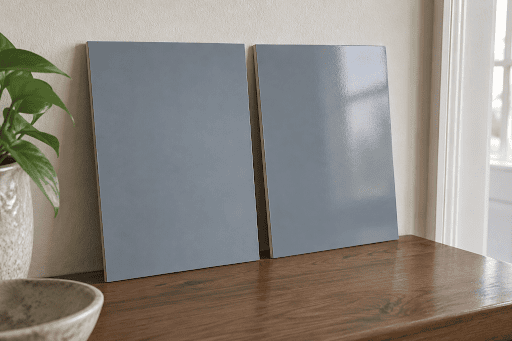
Choosing a paint color is only part of planning an interior painting project. The finish, or sheen, you select can affect how the color looks, how much light reflects from the surface, how noticeable wall imperfections appear, and how the painted surface should be cleaned.
There isn’t one finish that’s automatically right for every room. Your wall condition, natural and artificial lighting, daily activity, moisture exposure, and cleaning needs should all be considered alongside the color.
At Marc Poulos Painting & Decorating, we can help you compare paint finishes based on the way each room in your home is actually used. The goal is to find a combination of color, sheen, and product performance that works for both the appearance you want and the maintenance the space requires.
Understanding Interior Paint Finishes
Paint finishes, also called paint sheens, describe how much light the dried coating reflects.
Lower-sheen finishes generally create a softer appearance and reflect less light. This can help make minor surface variations less noticeable. Higher-sheen finishes reflect more light, which can emphasize architectural details but may also make dents, patches, texture differences, and other wall imperfections easier to see.
It’s important not to assume that higher sheen automatically means better durability. Washability, stain resistance, moisture performance, and wear resistance also depend on the formulation of the specific paint product.
That’s why finish selection should involve more than simply choosing between matte, eggshell, satin, and semi-gloss based on their names.
Consider the Condition of Your Walls
Before selecting a finish, look carefully at the surfaces being painted.
Older walls may contain patches, dents, cracks, texture differences, or previous repairs. Because higher-sheen finishes reflect more light, some of these imperfections may become more noticeable after painting.
Preparation can improve the appearance of the finished surface, but the existing condition of the wall should still be part of the finish discussion.
If you’re concerned about particular areas, point them out during your painting estimate. This gives you an opportunity to discuss preparation and finish selection together rather than treating them as separate decisions.
Choosing a Finish for Your Living Room
Living rooms are often among the most frequently used spaces in a home, but they usually don’t experience the same moisture or frequent cleaning as kitchens and bathrooms.
Eggshell is one option to consider for a living room because it provides some sheen without creating the stronger reflection associated with higher-sheen finishes.
When comparing eggshell with other options, consider:
- The appearance you want in the room
- How frequently the walls are touched or cleaned
- The selected product’s resistance to everyday wear
- The manufacturer’s cleaning recommendations
- The condition and texture of the existing walls
- The amount of natural and artificial light in the space
If your living room receives substantial natural light, view samples throughout the day. The combination of color and sheen may look noticeably different as the direction and intensity of the light change.
Compare Finishes for Kitchens
Kitchen walls can experience fingerprints, food splatters, grease, moisture, and more frequent cleaning than many other areas of the home.
Satin may be one option to discuss, but don’t choose it based on the finish name alone.
Ask whether the particular coating you’re considering supports the cleaning your kitchen requires, is appropriate for the room’s conditions, and provides the appearance you want.
Also consider which surfaces are actually being painted. Kitchen walls, trim, doors, and cabinets may require different coating systems even when you want their colors to coordinate.
A wall paint shouldn’t automatically be treated as suitable for cabinets simply because you like its sheen.
Think About High-Traffic Hallways
Hallways experience a different type of wear.
People may brush against the walls, children may leave marks, and backpacks, furniture, or household items can make contact with the surface. Because hallways connect multiple rooms, they can also receive changing light from several directions.
Consider both appearance and cleaning needs when selecting a hallway finish.
If the hallway connects directly to living areas, you may want visual continuity between the spaces. In that case, compare whether one product and finish can meet the needs of both areas or whether a change in finish makes more sense.
Consider Bathroom Conditions
Bathrooms introduce moisture and cleaning considerations that may be less important in bedrooms or formal spaces.
Rather than assuming a particular sheen is automatically the right choice, discuss the room’s ventilation, existing surface condition, and the performance requirements of the selected coating.
Manufacturer recommendations for the specific paint should help guide the decision.
If there are existing stains, peeling areas, or other surface concerns, those should also be evaluated before painting. A different finish alone won’t correct an underlying moisture or surface problem.
Compare Finishes for Trim and Doors
Trim and interior doors are frequently touched and can receive more direct contact than walls.
Semi-gloss is one option commonly considered for these surfaces. When comparing coatings, ask how the proposed product:
- Handles fingerprints and routine contact
- Supports the cleaning your household requires
- Holds up to repeated use
- Reflects light across the trim or door
- Coordinates visually with the wall finish
A difference in sheen can also help create visual separation even when the wall and trim colors are similar.
If you’re considering painted trim in the same color as the walls, compare the finishes together. Using the same color with different sheen levels can produce subtle variation as light moves through the room.
Use the Right Coating System for Cabinets
Cabinets deserve their own discussion.
Kitchen and bathroom cabinets experience frequent touching, cleaning, opening, and closing. The coating needs to be appropriate for that type of surface and use.
Don’t assume that choosing a higher-sheen wall paint automatically makes it suitable for cabinetry.
Ask about a coating system intended for cabinets and discuss the preparation required for the existing material and finish.
Color and sheen are still important, but they’re only part of choosing an appropriate cabinet coating.
Consider Flat or Matte Paint for Bedrooms
Bedrooms typically experience less wall contact and frequent cleaning than kitchens, hallways, or family spaces.
Flat or matte finishes can create a soft appearance and may help make minor surface variation less noticeable because they reflect less light.
They may be worth considering for:
- Primary bedrooms
- Guest bedrooms
- Home offices
- Formal sitting rooms
- Other lower-traffic spaces
However, don’t assume every flat or matte paint performs the same way.
Compare the cleaning and maintenance guidance for the specific product you’re considering, particularly if the room is used frequently or the walls are likely to need regular cleaning.
Don’t Forget About Ceilings
Ceilings are another surface where finish selection affects the appearance of the room.
Lower-sheen ceiling coatings are often considered when the goal is to reduce reflected light and minimize the visibility of minor surface variation.
However, ceilings aren’t always required to be bright white or treated completely separately from the room’s color design.
If you’re considering a deeper ceiling color, color drenching, or another coordinated approach, discuss how the color and finish will interact with the walls, trim, and room lighting.
Lighting Changes the Way Paint Looks
Lighting is one of the easiest factors to overlook when choosing a paint finish.
Natural sunlight, warm lamps, cool or neutral LEDs, recessed lighting, and directional fixtures can all change how color and sheen appear.
A finish that seems subtle in one room may look considerably more reflective in another.
View samples in the actual space before making your final decision. Look at them during different times of day and under the artificial lighting you normally use in the evening.
Pay particular attention to walls where light travels across the surface at an angle, because this can make both sheen and surface variation more apparent.
Consider Connected Rooms Together
If your home has an open layout, long hallways, or rooms that are visible from one another, finish selection can affect visual continuity.
You don’t necessarily need to use the same finish everywhere. Kitchens, hallways, bedrooms, and living rooms may have different practical requirements.
However, consider how transitions will look from one space to another.
Using coordinated colors and thoughtfully selected finishes can help connected areas feel intentional even when their coatings aren’t identical.
Compare Product Performance, Not Just Sheen Names
Paint manufacturers may use familiar terms such as flat, matte, eggshell, satin, and semi-gloss, but those names don’t tell you everything about the product.
Two paints with similar sheen descriptions may have different cleaning, durability, or application characteristics.
Review the manufacturer’s information for the specific products you’re considering.
Think about:
- Cleaning requirements
- Expected traffic and contact
- Moisture exposure
- Surface material
- Existing wall condition
- Desired appearance
- Natural and artificial lighting
This provides a better basis for choosing a paint than relying on sheen name alone.
Compare Finish Options During Your Estimate
Every home is different, and different rooms within the same home can have very different needs.
Your living room may prioritize appearance and natural light, while your hallway needs to accommodate frequent contact. Your kitchen may require regular cleaning, while a guest bedroom may place greater emphasis on a soft, low-sheen appearance.
At Marc Poulos Painting & Decorating, we can help you compare finishes based on the condition of the surfaces, the appearance you want, and how each room is used.
The goal isn’t to automatically follow a trend or apply one finish throughout the entire house. It’s to choose products and finishes that make sense for your particular spaces.
Frequently Asked Questions
What paint finish is easiest to clean?
Cleaning performance depends on the specific paint formulation, not sheen alone. Some lower-sheen products are designed to offer good washability. Review the manufacturer’s cleaning guidance for the products you’re considering.
Is eggshell or satin better?
Neither is automatically better. Eggshell generally has less sheen than satin, but terminology and performance vary between products. Consider the room, wall condition, lighting, desired appearance, and cleaning requirements.
Should every room have the same paint finish?
Not necessarily. Different rooms may have different moisture, traffic, and cleaning needs. However, using a consistent finish across connected spaces can make sense when the selected product meets the requirements of those areas.
Does paint finish affect how color looks?
Yes. The amount of reflected light can change how a color appears. Higher-sheen finishes may make a color look more reflective or pronounced, while lower-sheen finishes generally create a softer appearance.
Does higher sheen always mean more durable paint?
No. Durability and washability depend on the formulation of the specific coating. Sheen is only one characteristic to consider.
What finish should I use on cabinets?
Cabinets should be evaluated separately from walls. Ask about a coating system designed for the cabinet material, existing finish, preparation requirements, and expected use rather than selecting a standard wall paint based only on sheen.
The Right Paint Finish Completes the Room
Color, sheen, surface preparation, and product performance all work together in an interior painting project.
Choosing a finish with your daily routine in mind can help you plan both the appearance of your rooms and how you’ll care for the painted surfaces afterward.
If you’re planning interior painting in Arlington Heights or the surrounding northwest suburbs, schedule a free in-home estimate with Marc Poulos Painting & Decorating. We can look at the existing surfaces, lighting, room use, and colors you’re considering and help you compare finish options in the spaces where you’ll actually live with them.


