
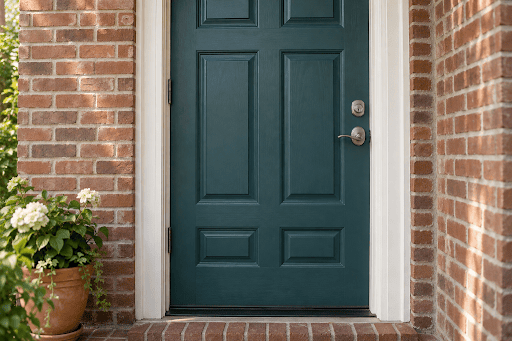
If you’re looking for a relatively small exterior project that can make a noticeable difference in your home’s appearance, the front door is a good place to start. Your entryway is one of the first areas guests, neighbors, and potential buyers see, and everyday exposure can leave the door and surrounding trim looking faded or worn.
A freshly painted front door can help the entrance feel cleaner and more intentional, but the finished result depends on more than choosing a new color. The door material, existing coating, surface condition, preparation, weather, and drying requirements should all be considered before painting begins.
At Marc Poulos Painting & Decorating, we can help you assess the door and surrounding trim before deciding what should be included in the project.
Know When Your Front Door Needs Attention
Exterior doors deal with frequent use along with changing weather conditions. Sunlight, rain, snow, moisture, and temperature changes can all affect painted surfaces over time.
Look closely at your entryway for signs such as:
- Peeling or chipped paint
- Faded or uneven color
- Cracked or failing caulk around appropriate trim areas
- Scuffs and scratches
- Worn edges
- Water staining
- Minor surface deterioration
- Previous repairs that remain visible
The amount of exposure can vary considerably from one home to another. A door protected by a deep covered porch may experience different conditions than a south- or west-facing entrance exposed to direct sunlight and precipitation.
Regularly inspecting the door and trim gives you an opportunity to address deterioration before deciding on the painting scope.
Evaluate the Door Before Deciding to Paint
Not every front door is automatically a candidate for repainting.
Start by identifying the door material and the condition of its existing finish. Wood, metal, fiberglass, and other door materials may require different preparation and compatible coating systems.
If you notice significant deterioration, recurring moisture problems, damaged components, or other concerns beyond the painted finish, point them out during your estimate.
Painting can improve and protect an appropriately prepared surface, but it shouldn’t be treated as a repair for every underlying problem.
The condition of the door should help determine whether repainting makes sense and what preparation will be required.
Choosing the Right Front Door Color
Your front door can either coordinate quietly with the rest of the exterior or become an intentional focal point.
Before choosing a color, look at the permanent or long-lasting features surrounding the entrance.
Consider:
- Siding or brick color
- Stone or masonry
- Roof color
- Existing trim
- Shutters
- Garage doors
- Walkways and hardscaping
- Exterior lighting
- Door hardware
- The architectural style of the home
You don’t necessarily need to match these features. Instead, look for a color that works with their undertones and creates the amount of contrast you want.
A neutral door can create a restrained appearance, while a deeper or more saturated color can draw attention toward the entrance.
Test the Color at the Actual Entryway
A small paint chip viewed indoors doesn’t always give you an accurate idea of how the color will appear on your front door.
Natural light changes throughout the day, and the orientation of the entrance can significantly affect the appearance of a color. A sample may look different in morning shade, direct afternoon sunlight, and evening light.
Whenever practical, compare potential colors at the actual entrance.
Look at the samples beside the trim, siding, brick, stone, and hardware that will remain. Step back toward the street or driveway as well. A color that looks appealing from a few feet away may create a different impression when viewed as part of the entire exterior.
Consider the Door and Trim Together
The door isn’t the only part of the entrance that affects curb appeal.
Surrounding trim helps frame the doorway and creates a transition between the door and the rest of the exterior. If the trim is chipped, faded, stained, or otherwise worn, a freshly painted door may make those conditions more noticeable.
During the estimate, evaluate both surfaces.
You may decide to repaint the door while leaving trim that is still in good condition, or include both in the project for a more coordinated update.
If you’re changing colors, compare the door and trim selections together before work begins. Contrast can emphasize the entrance, while closely related colors can create a more subtle appearance.
Preparation Is Important for a Lasting Finish
The finished appearance begins before the first finish coat is applied.
Preparation depends on the door material, existing coating, and surface condition. Depending on the project, the work may include:
- Cleaning the surface
- Removing loose or failing paint
- Sanding appropriate areas
- Smoothing minor imperfections
- Addressing suitable gaps or joints
- Preparing repaired areas
- Priming where required by the surface or coating system
Existing peeling or loose material shouldn’t simply be covered with another coat of paint.
Ask during your estimate which preparation steps apply to your particular door and whether surrounding trim needs repair before painting.
Choose a Coating Appropriate for the Door
The color and sheen are only part of the product decision.
The selected coating should be appropriate for the door material, existing finish, exposure, and intended use. A front door receives frequent contact and may also experience substantial sunlight and weather exposure.
Discuss the coating system rather than assuming any exterior paint will perform identically.
If the door has an existing factory or specialty finish, mention anything you know about it. Compatibility between the existing surface and the new coating should be considered during preparation and product selection.
Think About Sheen and Appearance
Paint sheen can influence both the appearance of the color and how surface variations are perceived.
A finish with greater sheen reflects more light and may emphasize details or imperfections in the door. Lower-sheen options produce a different visual effect.
Product performance shouldn’t be judged by sheen alone, however. The specific coating formulation, door material, exposure, and cleaning requirements also matter.
View color and sheen together when possible so you have a better idea of how the finished door will look.
Weather and Application Conditions Matter
Exterior painting depends on appropriate application conditions.
Temperature, humidity, precipitation, surface moisture, and the requirements of the selected coating can affect when the work should proceed.
A pleasant afternoon doesn’t necessarily mean every stage of the project has an appropriate weather window. Preparation, coating, drying, and curing requirements should all be considered.
If weather changes affect the schedule, ask how those changes will be communicated.
Following the product’s application requirements is more important than forcing the work into a particular day.
Plan for Door Access and Drying
Front door painting creates a practical question that is easy to overlook: how will you use the entrance while the coating dries?
Ask how the painting process will affect opening, closing, and locking the door.
Dry-to-touch and ready-for-normal-use aren’t necessarily the same thing. Closing a freshly coated door too early may allow painted surfaces to contact weatherstripping, trim, or other components before they’re ready.
Your contractor should be able to discuss the expected drying and use restrictions for the selected coating and project conditions.
If your household has another entrance available, planning to use it temporarily may make the project easier.
Consider Simple Updates Around the Entry
Once the door is refreshed, other worn or outdated features around the entrance may become more noticeable.
Depending on your home, you might also consider updating:
- House numbers
- Door hardware
- Exterior lighting
- Welcome mats
- Planters
- Seasonal decorations
These aren’t necessarily part of the painting project, but looking at the entrance as a complete area can help you decide which updates matter most.
You don’t need to replace everything. Sometimes fresh paint and a few coordinated details are enough to change the overall appearance.
Check HOA Requirements Before Changing Colors
If your home belongs to an HOA or another community association, confirm whether exterior color changes require approval.
Some associations maintain approved color palettes or require an application before visible exterior changes are made.
Check those requirements before ordering paint or scheduling a color change.
If approval documentation is required, keep the approved manufacturer, color name, and color code with your project information so everyone is working from the same selection.
Frequently Asked Questions
Should I paint my front door or replace it?
If the door is structurally sound and the primary concern is its painted appearance, repainting may be worth considering. Significant damage or other functional problems should be evaluated separately before deciding whether painting is appropriate.
How long does front door painting take?
The schedule depends on the condition and material of the door, preparation requirements, coating stages, drying time, weather, and whether surrounding trim is included. Ask specifically when the door can be closed and used normally.
What type of paint should be used on a front door?
The coating should be appropriate for the door’s material, existing finish, exposure, and intended use. Product selection should be based on compatibility and performance rather than color or sheen alone.
Do I need to prime my front door?
Primer requirements depend on the existing coating, door material, repairs, surface condition, and selected paint system. Bare or repaired areas and some significant color or coating changes may require primer.
Should the front door and trim be painted at the same time?
Not necessarily. If the trim remains in good condition, it may not need repainting. If it is faded, chipped, or worn, including it can create a more consistent finished appearance.
How often should a front door be repainted?
There isn’t one schedule that applies to every door. Sun exposure, weather, door material, previous preparation, coating system, and everyday use all affect how the finish ages. Periodic inspection is more useful than relying on a fixed number of years.
Give Your Home a Stronger First Impression
Front door painting may be a relatively focused project, but careful color selection and surface preparation can make it an important part of your home’s exterior appearance.
Start by evaluating the condition of the door and trim, then consider the existing exterior colors, door material, exposure, preparation requirements, and appropriate coating system. Planning for drying and access is also important so you know how the entrance can be used while the project is underway.
If you’re considering front door painting in Arlington Heights or the surrounding northwest suburbs, schedule a free in-home estimate with Marc Poulos Painting & Decorating. We’ll help you discuss color, preparation, trim repairs, coating options, weather considerations, and access during drying before work begins.


