
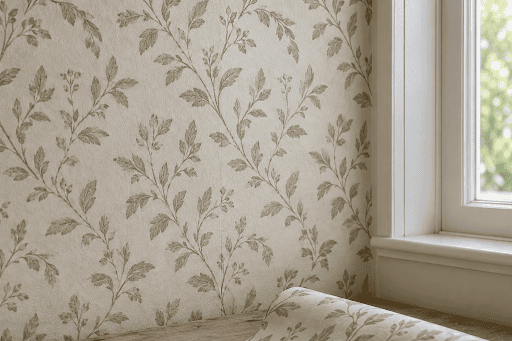
Wallpaper can completely transform a room, adding pattern, texture, color, and visual interest in ways that paint alone may not provide. Whether you’re considering a bold feature wall, a subtle textured wallcovering, or wallpaper throughout an entire room, the quality of the finished installation depends on more than the material you choose.
Wall condition, preparation, primer, adhesive or application method, pattern layout, seams, corners, and room conditions can all affect the finished appearance.
At Marc Poulos Painting & Decorating, we can help you plan wallpaper installation around the condition of your walls and the specific wallcovering you’ve selected. Understanding those details before hanging begins helps establish realistic expectations for both the installation and finished result.
Start With the Condition of the Walls
Wallpaper installation begins with evaluating the surface underneath it.
Some wallcoverings can reveal dents, ridges, old patches, texture differences, and other imperfections rather than concealing them. The visibility of those conditions depends partly on the material, pattern, lighting, and existing wall surface.
Before installation, inspect the walls for conditions such as:
- Nail and screw holes
- Hairline cracks
- Dents and impact damage
- Uneven drywall repairs
- Damaged plaster
- Peeling or loose paint
- Rough or inconsistent textures
- Previous wallpaper adhesive or residue
If wallpaper has previously been removed, the wall may require additional attention before another material is installed.
The preparation should reflect both the condition of the wall and the requirements of the new wallcovering.
Don’t Assume Wallpaper Will Hide Imperfections
A busy pattern can sometimes make minor surface variation less visually obvious, but wallpaper shouldn’t be treated as a substitute for appropriate wall preparation.
Some materials can make imperfections particularly noticeable when light travels across the surface. Thin or smooth wallcoverings may reveal underlying variations differently from heavier or textured materials.
That’s why the selected wallpaper should be available for review when planning the preparation.
If your walls have visible patches, damaged areas, or texture, ask what should be addressed before installation rather than assuming the new material will conceal everything.
Repair and Smooth the Surface as Needed
Once the wall condition has been evaluated, appropriate preparation can begin.
Depending on the surface, this may include filling nail holes, addressing suitable cracks, smoothing previous repairs, sanding rough areas, removing loose material, or preparing areas affected by previous wallcoverings.
The goal is to create a sound surface appropriate for the selected product.
Older plaster walls may require different preparation than modern drywall. Likewise, a previously painted wall can present different conditions than a wall from which wallpaper was recently removed.
If there are recurring cracks, moisture concerns, or loose wall material, those conditions may need additional assessment rather than simply being covered.
Proper Priming Can Make a Difference
Primer can be an important part of wallpaper preparation, but the appropriate product and process depend on the wallcovering and existing surface.
For traditional wallcoverings, a compatible wallpaper primer may help prepare the wall for installation. It can help control surface absorption and may support future removal depending on the complete wallcovering system.
However, not every wallpaper product uses the same installation method.
Peel-and-stick materials, pre-pasted wallpaper, traditional pasted products, and specialty wallcoverings can have different surface preparation and waiting-time requirements.
Always consider the manufacturer’s instructions for the specific material being installed rather than applying one preparation method to every wallpaper project.
Match the Installation Method to the Wallcovering
The word “wallpaper” covers a wide range of products.
Depending on what you’ve selected, the material may be:
- Vinyl
- Non-woven
- Traditional paper
- Textured wallcovering
- Pre-pasted
- Peel-and-stick
- Another specialty material
Different products can require different adhesives or application methods.
Using a method that isn’t compatible with the selected material or wall surface can contribute to adhesion problems, lifting edges, bubbles, or other installation concerns.
Before work begins, confirm which installation method is specified for the wallcovering and whether any special surface preparation is required.
Plan the Pattern Before the First Strip Is Hung
Patterned wallpaper requires planning before installation begins.
Patterns may repeat vertically and horizontally across adjacent strips. Depending on the design, the repeat can affect where strips begin, how much material is required, and how the pattern appears around doors, windows, corners, and other architectural features.
The room layout should therefore be considered before the first strip is cut.
A prominent wall or focal point may influence where the pattern begins. The installer may also need to consider how the design will appear when it reaches less-visible areas of the room.
Planning ahead can help avoid an awkward pattern placement becoming the first thing you notice every time you walk into the space.
Understand Pattern Matching
Not every patterned wallpaper aligns in exactly the same way.
Some designs have straightforward repeats, while others require more careful matching between strips. Large-scale patterns may make alignment particularly noticeable because the eye naturally follows the design across the wall.
Accurate measurements and careful placement are important.
Small alignment differences may seem minor when you’re standing close to an individual strip, but they can become much more noticeable once several strips are installed and the pattern is viewed across the entire wall.
If you’ve selected a wallpaper with a large or complex pattern, discuss how the repeat affects both installation and material requirements.
Understand What to Expect From Seams
Seams are one of the details homeowners commonly notice when evaluating wallpaper.
The expected seam appearance depends on the wallcovering itself, its color, texture, pattern, backing, installation method, and lighting.
Some materials may produce seams that are more visible than others even when installed according to the product requirements. Natural or specialty wallcoverings may also have variations that are part of the material rather than installation defects.
Discuss those characteristics before installation so you understand what is normal for the product you’ve selected.
Lighting matters here too. Strong directional light traveling across a wall can make seams and surface variations more noticeable.
Corners, Doors, and Windows Need Planning Too
Wallpaper doesn’t exist only on large uninterrupted walls.
Corners, windows, doors, outlets, switches, built-ins, and other architectural details all affect installation.
The pattern needs to remain visually coordinated as it moves around these features. Corners can be particularly important because walls aren’t always perfectly square or plumb.
An installation plan should account for the actual room rather than assuming every surface is geometrically perfect.
If your room contains unusual architectural features, point them out when discussing the project.
Measure Carefully Before Ordering Wallpaper
Wallpaper patterns and repeats can affect how much material a project requires.
Room dimensions alone don’t necessarily tell the whole story because pattern matching can create additional material requirements.
Doors and windows also don’t always translate directly into an equivalent reduction in the amount of wallpaper needed, particularly when pattern continuity has to be maintained.
Before ordering material, make sure measurements and pattern information are considered together.
It’s also useful to keep the wallpaper’s identifying information in case additional material is needed or you want to reference the product later.
Consider the Installation Environment
Room conditions can affect wallpaper installation and drying.
Review the selected product’s requirements for temperature, humidity, ventilation, surface condition, and drying time.
Try to maintain appropriate conditions during installation rather than making dramatic environmental changes while the wallcovering is setting.
If the room has an existing moisture problem, that should be addressed separately before wallpaper installation. A new wallcovering shouldn’t be used to conceal an unresolved moisture condition.
Plan Furniture and Room Access
Wallpaper installation requires access to the walls.
Before the project begins, discuss how furniture, artwork, window treatments, electronics, and other belongings will be handled.
Smaller decorative items may need to be removed from the room, while larger furniture may need to be repositioned to provide working space.
Floors and remaining belongings should also be considered as part of the protection plan.
If the project covers several rooms, ask how the work will be sequenced and when individual spaces can return to normal use.
Know What You’re Buying Before Installation Begins
Wallpaper can represent a significant material investment, so confirm the product before installation.
Keep the manufacturer’s instructions, product identification, lot or batch information when applicable, and any other relevant documentation.
Inspect the material for obvious concerns before hanging begins.
If natural variation is expected in the selected wallcovering, discuss how that variation may appear across the finished installation.
Understanding the material beforehand is much easier than trying to resolve a product expectation after an entire room has been installed.
What to Discuss Before Wallpaper Installation
Before your Glenview wallpaper project begins, discuss:
- Existing wall condition
- Required repairs and smoothing
- Primer requirements
- Wallpaper material and manufacturer instructions
- Adhesive or installation method
- Pattern repeat and layout
- Expected seam appearance
- Corners and architectural features
- Material quantities
- Furniture and room access
- Temperature and humidity requirements
- Drying time
- Cleaning and care instructions
Wallpaper is a detail-oriented finish, and these decisions can influence both installation and the appearance of the completed room.
Frequently Asked Questions
Why does wallpaper develop bubbles?
Bubbles can have several potential causes, including surface conditions, trapped air, adhesive application, or installation issues. The specific cause should be evaluated rather than assuming every bubble has the same explanation.
Can wallpaper be installed over textured walls?
It depends on the wall texture and the selected wallcovering. Some surfaces may require smoothing or other preparation. Check the wallcovering requirements rather than assuming a pattern or heavy material will conceal an uneven wall.
Does every wallpaper need primer?
Not necessarily. Preparation requirements depend on the wall surface and selected product. Traditional, peel-and-stick, pre-pasted, and specialty wallcoverings may have different instructions.
How long does wallpaper adhesive take to dry?
Drying and curing requirements depend on the adhesive, wallcovering, room conditions, and installation system. Follow the manufacturer’s instructions and ask when the surface can return to normal use or cleaning.
Will wallpaper seams be completely invisible?
Seam appearance depends on the wallcovering, pattern, material, installation method, and lighting. Discuss what should reasonably be expected from your particular product before installation.
How much wallpaper should I order?
Material requirements depend on wall dimensions as well as pattern repeat, matching requirements, room features, and the particular wallcovering. Measure and plan the layout before ordering rather than relying on wall area alone.
What should I ask before hiring a wallpaper installer?
Ask how the walls will be evaluated and prepared, how the pattern will be laid out, which adhesive or installation method is appropriate, what seam appearance to expect, and how room access and protection will be handled.
Beautiful Wallpaper Begins With Careful Preparation
Wallpaper can add color, pattern, texture, and personality to a room, but the material itself is only one part of the finished result.
Wall preparation, compatible products, careful pattern planning, seam placement, room conditions, and attention to architectural details all contribute to the installation.
If you’re considering wallpaper installation in Glenview or nearby communities, schedule a free in-home estimate with Marc Poulos Painting & Decorating. We’ll help you review the wall condition, selected material, pattern layout, preparation requirements, room access, and installation details before hanging begins.


