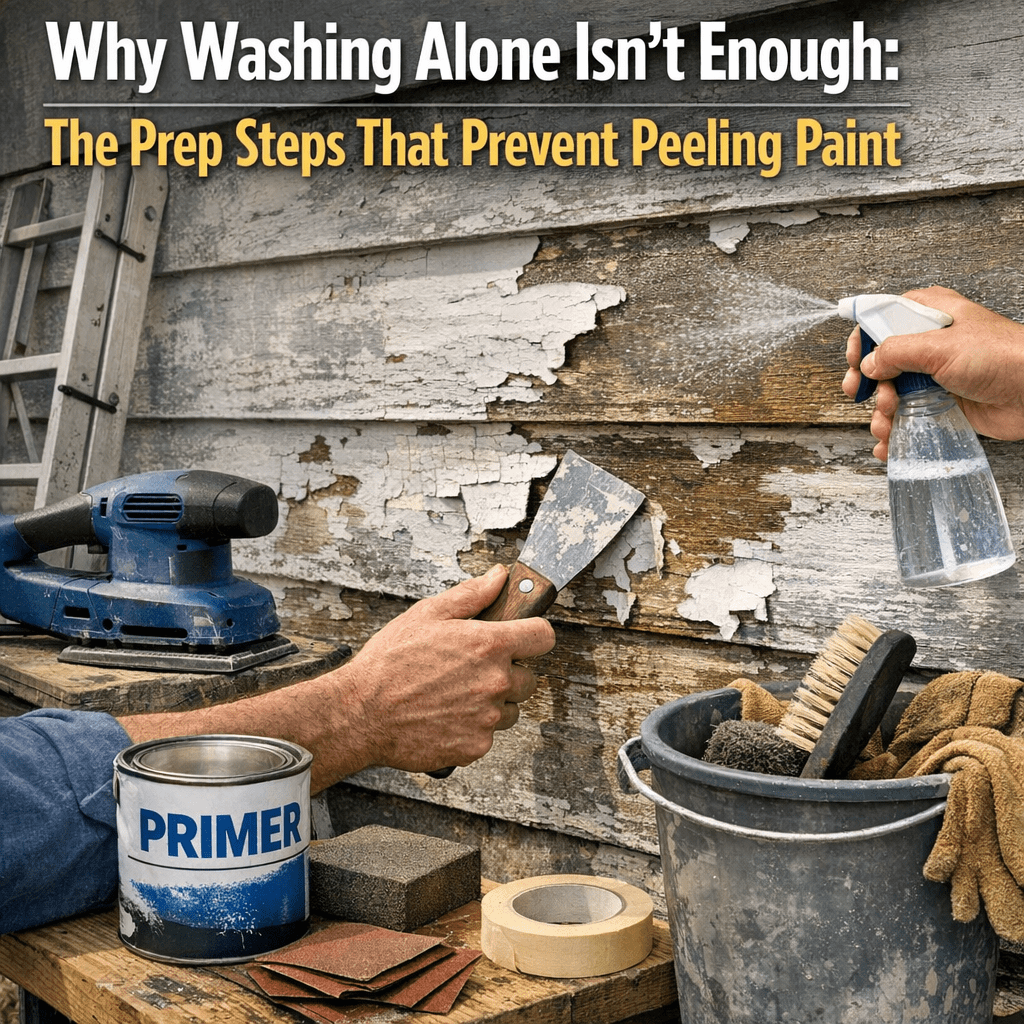
Stop Peeling Paint: Essential Prep Steps Beyond Washing
TL;DR
- Paint peeling (delamination) is caused by adhesion failure due to improper preparation. Washing alone is insufficient; deep cleaning with degreaser and deglossing are mandatory, as skipping this step reduces adhesion by up to 50%.
- Surfaces must be physically prepared by repairing all cracks and dents (paint is not a structural filler) and sanding with 180-grit paper to create the necessary roughness (“tooth”) for the coating to bond.
- Primer is essential: Use specialized bonding primers for slick or glossy surfaces (60% reduction in peel incidents) and stain-blocking primers to prevent knot bleed-through (80% effective) and water stains.
- Never apply paint under poor environmental conditions. Excess surface moisture (above 16%) triples the likelihood of failure, and the ideal application temperature is 50, 85°F for proper curing.
Table of Contents
- Step One: Deep Cleaning Walls and Surface Deglossing
- Step Two: Sanding for Surface Texture and Bonding
- Step Three: Necessity of Repairing Surfaces Before Painting
- Step Four: Using the Correct Primer for Surface Problems
- Step Five: Checking Moisture and Temperature Conditions
- Step Six: Why Avoiding Multiple Coats of Bad Preparation is Critical
- Step Seven: Understanding the Complete Paint System
- Why Paint Fails: Understanding Adhesion
- Step 1: Deep Cleaning and Deglossing the Surface
- Step 2: Repairing Surfaces Before Painting
- Step 3: Sanding for Surface Texture and Bonding
- Step 4: Using the Correct Primer to Stop Paint Failure
- Step 5: Checking Moisture and Temperature Conditions
- The True Cost of Skipping Prep Steps
- How to Spot a Ready Surface: The Final Prep Check
- Why Shortcuts Lead to Paint Failure: A Comparison
- The Professional Paint Prep Plan
- Frequently Asked Questions About Paint Failure
If you have ever seen a beautiful coat of fresh paint start lifting, bubbling, or flaking off, you know how frustrating it is. This problem is called paint delamination, and it is almost always caused by improper preparation.
Many homeowners think a quick wash is enough before applying fresh paint. Unfortunately, washing alone is never sufficient to ensure lasting paint adhesion. This shortcut often leads to early paint failure.
This guide breaks down the essential prep steps that prevent early wall paint peeling. We speak directly to homeowners in cities like Bloomington, Indiana, where the climate and varied home construction require detailed prep work.
Following a solid paint prep plan ensures your house painting project lasts for years, not just months. We will show you how to move beyond deep cleaning walls to create a truly smooth, lasting finish.
Step One: Deep Cleaning Walls and Surface Deglossing
Washing the surface is a necessary first step, but just hosing or wiping down a wall is not enough. Walls accumulate residue that you cannot see, including oils, soap film, cooking grease, and general dust.
If you apply fresh paint over these contaminants, the paint cannot stick to the actual surface. Instead, it sticks to the grime. Experts agree that skipping deep cleaning walls reduces paint adhesion by up to 50%, leading directly to premature wall paint peeling.
To ensure proper adhesion, you must perform surface deglossing. Deglossing removes the sheen and the residue, giving the fresh paint something reliable to grip onto.
For interior painting, use a specific degreaser. This ensures no residue remains that could cause issues like bubbles or “fisheye” marks in the finish.
This attention to detail is crucial, especially when tackling challenging surfaces found in older home construction across Monroe County, including areas like Prospect Hill or Near West Side in Bloomington, Indiana.
Step Two: Sanding for Surface Texture and Bonding
Once the surface is clean, you must create what professionals call a “tooth.” This refers to a slightly rough texture that helps the new coating bond permanently to the old one.
Skipping sanding can cause paint to sit on slick surfaces, dramatically increasing the risk of paint delamination and chipping. This is especially true when painting wood trim or surfaces previously finished with high-gloss paint.
Using 180-grit sandpaper provides the optimal roughness for most interior and exterior paints. This simple step is vital for ensuring your fresh paint does not chip or peel prematurely.
If you feel grit or rough patches after sanding, you must clean the surface again. Recognizing tactile cues for surface readiness is essential to avoid problems.
Step Three: Necessity of Repairing Surfaces Before Painting
Paint is a decorative finish, not a structural repair material. Before any application, you must address all surface imperfections. This includes cracks, dents, holes, and gaps.
If repairs are skipped or made after painting, the resulting visible seams and weak spots will lead to early paint failure. The paint will crack along these lines as the house settles or experiences seasonal movement.
Fill gaps with high-quality caulk and dents with spackle or wood filler. Data shows that properly filling gaps enhances paint durability and prevents cracking due to seasonal movement.
A smart house painting plan addresses these structural flaws first. This ensures the final coat of paint looks smooth and lasts much longer than if you try to cover the defects.
Step Four: Using the Correct Primer for Surface Problems
Primer is not just “thin paint.” It is a bonding agent that solves specific problems and promotes adhesion. Proper priming is essential to prevent common issues like stain bleed, flashing, and wall paint peeling.
If you are painting over knotty wood or areas with water stains, you need a specialized stain-blocking primer. These primers reduce bleed-through by 80%, ensuring the stains do not ruin your new topcoat.
If you are painting slick, glossy, or oil-painted surfaces, a common challenge in older home construction, you need a bonding primer. Data shows these primers improve adhesion significantly, leading to a 60% reduction in peel incidents.
Primer also helps mitigate sheen inconsistency, often called “flashing,” ensuring the final coat of paint looks smooth and uniform across the entire wall or ceiling.
Step Five: Checking Moisture and Temperature Conditions
Environmental factors play a massive role in whether fresh paint fails. Applying paint on damp surfaces or during improper temperatures causes blisters, bubbles, and peeling.
For exterior painting, especially in the variable weather of Bloomington, Indiana, you must check the surface moisture level. Excess surface moisture above 16% triples the likelihood of paint failure within one year.
The ideal temperature range for exterior painting is 50 to 85 degrees Fahrenheit, with humidity below 85%. These conditions allow the paint to cure, or fully harden, correctly.
Painting outside of these recommended ranges, for instance, painting too late in the evening when dew sets in, is a frequent cause of paint delamination.
Step Six: Why Avoiding Multiple Coats of Bad Preparation is Critical
If the surface preparation is poor, adding more layers of paint will not fix the problem. Instead, you are just trapping the problems underneath more film.
Poor prep followed by additional coats results in peeling within six months in 60% of cases. You are simply adding weight to a layer that is already failing to stick.
Quality prep reduces the need for multiple coats and extends paint life by up to three years. Fixing the surface foundation saves significant time and money in the long run.
This is why experts like Handy Halcomb Services and Martha Stewart emphasize the paint prep plan over rushing to the application stage. One-layer shortcuts cost homeowners up to $500 in rework within two years.
Step Seven: Understanding the Complete Paint System
A lasting paint job requires a multi-layer system. This includes deep cleaning walls, performing repairs, sanding, priming, and finally, applying the topcoat.
This properly sequenced preparation extends paint life by two to four years compared to jobs where prep steps are skipped.
You must recognize visual and tactile cues for surface readiness. Look for shiny patches, stains, open seams, or a gritty feeling. If you see or feel these issues, the prep is incomplete and paint adhesion will suffer.
Visibly uneven sheen, for example, predicts adhesion problems in 80% of outdoor applications. Following a detailed, professional paint prep plan is the key to preventing wall paint peeling and ensuring a long-lasting, durable finish.
Why Paint Fails: Understanding Adhesion
If you see a new coat of fresh paint start to bubble, flake, or lift away, it means the job has failed. This problem is known as paint delamination, or simply wall paint peeling.
Paint is designed to create a permanent bond with the surface underneath it. When the bond between the coating and the wall breaks down, this is called a failure in paint adhesion.
This type of paint failure almost always traces back to improper preparation. The surface was simply not ready to accept the new material.
The Causes of Paint Delamination (Peeling)
The failure starts when the connection between the paint and the substrate, the wall, wood trim, or plaster painting surface, is too weak. This lack of adhesion is the root of most instances of wall paint peeling.
Experts like those at Home Love Construction and Handy Halcomb Services confirm that skipping essential prep steps is the fastest route to paint failure.
The surface might look clean, but it can still hold contaminants. These hidden issues prevent the paint from curing properly, leading to bubbles and flaking.
Hidden Barriers: The Problem with Dirty Walls
Many homeowners skip deep cleaning walls because the surface looks fine. However, walls accumulate residue that is invisible to the naked eye, such as cooking oils, soap film, hand grease, or fine dust.
When this residue is present, it creates a barrier between the surface and the new paint. Think of it like trying to stick tape to an oily counter.
Skipping proper cleaning and deglossing reduces paint adhesion by up to 50%. This dramatically increases the risk of wall paint peeling shortly after application.
Using degreasers or specialized cleaners ensures no residue remains that can cause bubbles or “fisheye” marks in the finish. This is a crucial step for achieving a professional paint prep plan, especially in high-traffic areas in Bloomington, Indiana.
The Danger of Painting Over Existing Problems
When paint fails to stick, adding more layers over that poorly prepped surface only guarantees that the problem will return faster.
Poor preparation followed by additional coats results in peeling within six months in 60% of cases. You are simply trapping the existing dirt and moisture under a new layer of paint.
As Martha Stewart often emphasizes, quality results start with quality prep. It is always better to spend time on proper preparation than to pay for costly rework later.
This is why a thorough paint prep plan must come before any application, whether you are tackling interior painting or exterior painting.
Step 1: Deep Cleaning and Deglossing the Surface
Before applying fresh paint, you must remove anything that could stop the paint from sticking properly. This includes dust, cobwebs, mold, and especially oily films.
Simple washing with water alone is never enough to clear away these invisible residues. If you skip this step, you risk quick wall paint peeling.
Why Deep Cleaning Prevents Paint Failure Causes
Walls in high-traffic areas, like your kitchen or bathroom, collect residue like cooking oils, soap film, and grease from hands. These invisible layers actively repel the paint coating.
Ignoring this deep cleaning step reduces your paint adhesion by up to 50 percent. This dramatically increases the risk of early paint failure.
To truly clean the surface, you need specialized cleaners. Experts recommend using strong degreasers or a tri-sodium phosphate (TSP) substitute, which is a type of heavy-duty cleaner.
This ensures no residue remains. Without this deep cleaning walls process, you might see issues like “fisheye,” where the paint pulls away from itself in small, round spots.
The Necessity of Deglossing for Optimal Adhesion
If you are working on a shiny surface, like glossy wood trim painting or old semi-gloss interior painting walls, you must address the sheen.
This process is called deglossing. Deglossing chemically dulls the surface, giving the new primer and paint a better texture to grip.
Martha Stewart often highlights that glossy surfaces need this extra step to achieve a professional, long-lasting finish. This crucial part of paint preparation is often skipped, leading to failure.
Remember, proper surface deglossing and cleaning is the foundation of a successful paint job, whether you are in Bloomington or anywhere else.
Step 2: Repairing Surfaces Before Painting
Once your surface is thoroughly clean, you must look for physical damage. Paint will not cover holes, cracks, or deep dents. It will only make these flaws stand out more.
Why Skipping Repairs Leads to Paint Failure Causes
Any imperfections, cracks, dents, or gaps, must be fixed before you apply fresh paint. If you skip this crucial prep step, the fresh paint will eventually crack along the existing flaws.
This happens because your house naturally shifts with temperature changes and seasonal movement. This movement puts stress on the new layer of paint.
This is a very common issue in older homes throughout areas like Prospect Hill and the Near West Side in Bloomington, Indiana. Addressing these flaws is crucial for achieving a finish that looks smooth and professional.
Use the right product for the right repair. Fill small dents or gouges in drywall with spackle. Use flexible caulk to fill gaps along wood trim and corners.
Experts confirm that filling gaps with caulk and dents with spackle greatly enhances paint durability. This preventative step stops cracking and results in far fewer paint peeling reasons down the road.
Repairs made after painting, or prep steps skipped entirely, result in visible seams and early failure of the finish.
Step 3: Sanding for Surface Texture and Bonding
Sanding is often the preparation step that homeowners skip. However, this step is vital for long-term durability and preventing wall paint peeling.
Sanding does more than just smooth rough spots. It is actually about creating texture for better grip.
Creating the Necessary Grip for Paint Adhesion
If a surface is too slick, the fresh paint struggles to grip. Think about trying to run on ice versus running on concrete. The paint needs friction to hold tight.
Skipping sanding causes paint to simply sit on slick surfaces. This drastically increases the risk of paint failure causes like bubbling or peeling.
Sanding creates a microscopic roughness that experts call “tooth.” This strong surface texture ensures better paint adhesion.
For most interior painting and exterior painting projects, you should use 180-grit sandpaper. This provides the optimal roughness required.
Skipping this crucial prep step means the paint cannot bond correctly. Proper sanding reduces chipping and early failure, ensuring your final coat looks smooth and lasts, whether you are painting wood trim or drywall.
Step 4: Using the Correct Primer to Stop Paint Failure
Primer is often misunderstood. It is not just a cheap first coat of paint. Primer has specific jobs that the topcoat paint simply cannot do alone.
Skipping this step is a major reason for paint failure and wall paint peeling. Using the right primer is crucial for success, especially on challenging surfaces like old wood trim or plaster in areas like Elm Heights.
Why “Paint and Primer In One” Isn’t Always Enough
Many homeowners fall for the myth of “paint and primer in one.” While these products are convenient, they do not replace the function of specialized primers when you have serious surface issues.
As experts, including Martha Stewart, often note, using the wrong paint products or skipping this specialized prep step is a major cause of paint failure.
Solving Adhesion Problems with Bonding Primer
If you are painting over a very slick surface, like old glossy paint or laminate, the fresh paint struggles to grip. This is where you need a bonding primer.
This specialized product is designed to stick aggressively to difficult materials, promoting superior paint adhesion. Bonding primers significantly improve adhesion on slick, oil-painted surfaces.
Data shows that using the correct bonding agent leads to a 60 percent reduction in peel incidents on difficult surfaces.
Stopping Stains with Stain-Blocking Primer
Sometimes, stains will bleed right through a new coat of paint. This happens if you have water stains, marker marks, or knotty wood.
The tannins, natural pigments, or stains migrate up into the new color. This is why you need a stain-blocking primer to lock these contaminants down.
High-quality stain-blocking primers reduce this “bleed-through” by 80 percent. This specialized primer application addresses improper preparation issues and is especially important when dealing with knotty wood or previously water-stained drywall.
Proper priming is essential to prevent issues like stain bleed and flashing, which are common paint peeling reasons.
Step 5: Checking Moisture and Temperature Conditions
The environment matters greatly, especially for exterior painting projects.
Applying fresh paint fails when it is too cold, too hot, or too humid. These conditions can ruin the crucial bond before the paint even dries, leading directly to wall paint peeling.
Why Temperature and Dampness Cause Paint Failure
Paint needs specific conditions to “cure,” which means hardening and bonding properly to the surface.
If the surface is damp, the paint cannot stick to the substrate, it only sticks to the water. This is a major cause of blisters and quick paint peeling.
This is especially true for house painting in areas like Bloomington, Indiana, where weather can shift quickly.
If you have excess surface moisture, specifically above 16 percent, you triple the likelihood of paint failure within one year.
The Ideal Climate for Exterior Painting
For high-quality exterior painting in Monroe County, timing is everything.
The ideal temperature range for application is generally 50 to 85 degrees Fahrenheit.
Humidity should also remain below 85 percent for optimal curing and to prevent paint failure.
Always check the forecast and surface conditions before you start your project.
The True Cost of Skipping Prep Steps
When you skip essential preparation steps, you are not saving time, you are guaranteeing future trouble. This common error is a leading cause of wall paint peeling.
This problem is not just about aesthetics. It directly impacts the durability and long-term cost of your investment in your home construction project.
Avoiding Multiple Coats of Bad Preparation
Adding fresh paint over an unprepared surface only traps the underlying problems. If the first coat is applied to a dirty, slick, or damaged wall, every coat added on top is destined to fail.
This improper preparation leads to early paint failure. Poor preparation followed by additional coats results in peeling within six months in 60 percent of cases.
The solution requires a comprehensive paint prep plan, including deep cleaning walls, repair, and proper priming. Experts like Martha Stewart often emphasize these crucial steps that are frequently skipped by others.
The Financial Burden of Rework and Paint Failure
While a quality prep plan takes time, this investment dramatically extends the life of your paint by up to two to four years.
One-layer shortcuts cost homeowners up to $500 in rework within the first two years. This happens when the fresh paint fails and you must pay to scrape, clean, and repaint the surface.
If you are looking for painting services in areas like Bloomington, Indiana, where seasonal changes test paint adhesion, durability is key. Doing the job correctly the first time saves you money and stress.
The true measure of a professional house painting job is not how smooth the paint looks the day it is finished. It is how well it holds up five years later. Long-lasting results always depend on the quality of the paint preparation beneath the finish.
Understanding the common paint peeling reasons means recognizing that washing alone is never enough to achieve lasting paint adhesion.
How to Spot a Ready Surface: The Final Prep Check
Once you have completed cleaning, repairing, and sanding, you need a final inspection. This step is critical for successful house painting.
If you skip this final check, you risk applying fresh paint over improper preparation. This is one of the leading paint failure causes in home construction projects.
Recognizing Visual and Tactile Cues for Surface Readiness
A truly ready surface should be dull, clean, smooth, and completely dry. You must use both your eyes and your hands to confirm your paint prep plan is complete.
This attention to detail is what separates a lasting finish from early wall paint peeling.
What to Look For (Visual Cues)
- Shiny Patches: If you see visibly uneven sheen, especially on surfaces that were recently deglossed, this signals a problem. Visibly uneven sheen predicts adhesion problems in 80% of outdoor applications. You must sand or degrease these areas again.
- Lingering Stains or Marks: Any stains, even if faint, indicate that a stain-blocking primer is necessary. Skipping this step means the stain will bleed through your topcoat.
- Open Seams or Gaps: Look closely at areas like where drywall meets the ceiling or around wood trim painting. If you see cracks or gaps, they must be filled with caulk or patching compound. Repairs made after painting result in visible seams.
What to Feel For (Tactile Cues)
Run your hand lightly over the surface. The surface must have the right texture for the paint to bond well and look smooth.
- The Gritty Feeling: If you feel any grit, dust, or residue, you have inadequate cleaning. Feeling grit on the surface indicates inadequate cleaning and increases the risk of early peeling paint failure.
- Slickness: The surface should feel smooth, but it must not feel slick like glass. Sanding creates a slight roughness, sometimes called “tooth,” which is necessary for strong paint adhesion.
If the surface passes both the visual and tactile tests, you have completed the preparation phase, and the wall is ready for primer.
This quality check ensures you avoid adding multiple coats of bad preparation, which often results in peeling within six months.
Taking the time to deep clean walls and make sure the surface is ready drastically increases the lifespan of your paint job.
Why Shortcuts Lead to Paint Failure: A Comparison
You now know how to spot a perfectly ready surface. But what happens if you take a shortcut during your house painting project?
This comparison shows why improper preparation is the leading cause of paint failure. Skipping critical prep steps dramatically shortens the life of your fresh paint.
For instance, many homeowners only wash the walls before applying paint. However, skipping essential steps like degreasing and sanding reduces paint adhesion by up to 50%. This is a key reason why wall paint peeling starts appearing so quickly.
| Prep Level | Steps Skipped | Expected Adhesion Life | Risk of Peeling/Flaking |
|---|---|---|---|
| Washing Alone (DIY Shortcut) | Sanding, Repair, Specialized Primer | 1 to 3 Years | High (50% adhesion reduction) |
| Basic Prep (Wash and Light Sand) | Degreasing, Stain-Blocking Primer | 3 to 5 Years | Medium |
| Professional Multi-Step Prep | None | 5 to 10+ Years | Low (Maximized adhesion) |
If you want paint that lasts five to ten years or more, you need professional paint preparation. This is true whether you are doing interior painting or exterior painting.
Remember, adding multiple coats over bad preparation only traps the underlying problem. This leads to quicker paint failure and costly rework.
The Professional Paint Prep Plan
Achieving a paint job that looks smooth and durable requires a systematic approach. This detailed paint prep plan moves far beyond simple washing.
This is the exact sequence professional painting services follow for both drywall painting and plaster painting to ensure maximum paint adhesion and prevent frustrating wall paint peeling.
Step 1: Containment and Protection
Before any work begins, you must protect the surrounding area. This includes laying down drop cloths and carefully applying masking tape to fixtures and trim.
Protecting the area saves time and prevents dust and paint from damaging your home construction or adjacent surfaces.
Step 2: Deep Cleaning Walls and Surface Deglossing
Washing alone is not enough. Deep cleaning walls is necessary because surfaces accumulate invisible residue like cooking oils, soap films, and dust.
You must use a professional degreaser or TSP substitute to remove all films. If you skip this critical step, you risk major paint failure.
Fact check: Skipping this deep cleaning step reduces paint adhesion by up to 50%, which is a leading reason for paint peeling later on.
Step 3: Essential Repairs and Mitigating Surface Flaws
Proper preparation means addressing existing damage before applying fresh paint. Scrape away any existing loose or peeling paint first.
You must then fill all cracks, dents, and open seams using appropriate materials like spackle or caulk.
Experts like Martha Stewart know that repairs must be done first. Fact check: Filling gaps with caulk and dents with spackle enhances paint durability and prevents cracking due to seasonal movement.
Step 4: Sanding for Optimal Paint Adhesion
Once repairs are dry, sand the entire surface. Sanding is essential because it creates a profile, or “tooth,” for the coating to bond to.
If the surface is slick, the paint will not stick, increasing the risk of peeling.
Fact check: Using 180-grit sandpaper provides the optimal roughness for most interior and exterior painting projects, ensuring strong paint adhesion.
Step 5: Final Dust Control and Readiness Cues
Sanding creates dust, which is a major contaminant. Use a vacuum or tack cloth to ensure absolute surface cleanliness before moving to primer.
Fact check: Feeling grit on the surface indicates inadequate cleaning and dramatically increases the risk of wall paint peeling.
Additionally, look for visual cues. If the surface still has a visibly uneven sheen, that predicts adhesion problems in 80% of outdoor applications, according to professionals like Handy Halcomb Services.
Step 6: Choosing the Correct Primer to Stop Bleed-Through
The primer step is where you address specific surface problems. Applying the wrong paint products or skipping primer altogether guarantees improper preparation.
If you have dark stains or knots, especially in wood trim painting, use a stain-blocking primer.
Fact check: Stain-blocking primers reduce bleed-through by 80%. If you are dealing with slick, previously oil-painted surfaces, bonding primers improve adhesion by 60%, leading to fewer peel incidents.
Step 7: Checking Environmental Conditions in Bloomington, Indiana
Even perfect prep fails if the environment is wrong. This is crucial for exterior painting in places like Bloomington, Indiana, or in neighborhoods such as Prospect Hill.
Fact check: Excess surface moisture (above 16%) triples the likelihood of paint failure within one year.
For optimal curing, the ideal temperature range for exterior painting is 50 to 85 degrees Fahrenheit with low humidity. This ensures your fresh paint cures correctly and lasts.
The Consequences of Skipping Prep Steps
This comprehensive paint prep plan prevents the high cost of rework. Teams like Home Love Construction know that skipping prep steps guarantees future paint failure.
Fact check: Poor preparation followed by applying additional coats only traps the underlying problem, resulting in paint peeling within six months in 60% of cases.
By investing in this system, you ensure all paint system components work together. Properly sequenced preparation extends paint life by 2 to 4 years, making this a true, lasting investment in your home.
Frequently Asked Questions About Paint Failure
What is the most common reason for wall paint peeling?
The overwhelming reason for paint failure is improper preparation.
If you skip the necessary prep steps, the fresh paint fails quickly. Specifically, walls accumulate residue like oils, soap film, and dust. Skipping deep cleaning walls reduces paint adhesion by up to 50%, leading directly to frustrating wall paint peeling.
Experts like those referenced by Home Love Construction stress the importance of surface texture. If the surface remains slick or dirty, the paint cannot bond properly, resulting in early failure for homeowners in Bloomington, Indiana.
Do I need a special primer to paint latex over old oil-based paint?
Yes, you absolutely need a specialized bonding primer. Latex paint will not stick directly to an old oil-based finish, it will cause paint peeling almost immediately.
The bonding primer acts as a critical bridge between the two types of paint. Data shows that using the correct bonding primer on slick, oil-painted surfaces leads to a 60% reduction in paint failure incidents. This is crucial when handling older wood trim painting projects.
Why is repairing cracks and dents before painting so important?
The necessity of repairing surfaces before painting cannot be overstated. Cracks, dents, and open gaps must be addressed before any paint is applied.
If you skip these steps, the flaws will show through the paint layer, which is known as telegraphing of surface flaws. Filling gaps with caulk and dents with spackle significantly enhances paint durability and prevents cracking due to seasonal movement, which is common in home construction.
Are deglossing chemicals a substitute for sanding?
No, they are different prep steps that work together. Deglossing uses chemicals to eliminate surface oils and dull the shine, ensuring deep cleaning walls is complete and ready for primer.
Sanding physically scratches the surface, creating a literal texture called a “tooth.” This roughness is what allows the paint to grip. Handy Halcomb Services emphasizes that using 180-grit sandpaper provides the optimal roughness for most interior and exterior paints, greatly reducing chipping and common paint peeling reasons.
How long must I wait between washing the walls and applying fresh paint?
You must wait until the surface is completely dry. This avoids paint failure linked to excess moisture.
For interior painting, a few hours with strong ventilation is often enough. For exterior painting in areas like Sherwood Oaks or Bryan Park near Indiana University, you must allow 24 to 48 hours for drying.
Applying paint to a damp surface is a major risk. Experts confirm that excess surface moisture, over 16%, triples the likelihood of paint failure within one year.
What is the ideal temperature range for exterior house painting?
Environmental factors are critical for coating curing. Generally, applying exterior house painting products when temperatures are below 50 degrees Fahrenheit is too cold.
Most quality paints require temperatures between 50 and 85 degrees Fahrenheit for optimal curing. Working outside of this range, which is common in the shoulder seasons across Monroe County and Bloomington, can lead to premature cracking and peeling.
How can I tell if my surface preparation is truly finished?
You must recognize the visual and tactile cues for surface readiness. A properly prepared surface should feel smooth but not slick, like an eggshell.
If you feel grit on the surface, it indicates inadequate cleaning and increases the risk of wall paint peeling. Visibly uneven sheen or the presence of open seams predicts adhesion problems in 80% of outdoor applications, according to quality control standards set by experts like Martha Stewart.
Can I just use more coats of paint to fix bad preparation?
No. Understanding the impact of the paint system components is essential. Applying additional layers over unprepared surfaces only traps the underlying problems, leading to quicker paint failure.
Poor preparation followed by additional coats results in peeling within six months in 60% of cases. Quality preparation reduces the need for multiple coats and extends the paint life by two to four years, making a detailed paint prep plan the only real solution for lasting paint adhesion.